A lot can go wrong as an agency's headcount climbs, and it rarely happens in a neat order - problems tend to surface together, and often overlap. Here are a few to get you started. A proper agency audit will identify the full picture for your business, but this is a useful place to begin.
Very few agencies have a structure plan for growth. The pressure tends to increase right when you win bigger accounts - which is exactly when capacity is already stretched.
There's a saying that winning more business is "a good problem to have." It is, but only if you've got the structure to handle it. Without one, you end up trying to service new, bigger accounts with the same team that's already stretched thin managing the old ones - and it's usually the client relationships you've spent years building that suffer first.
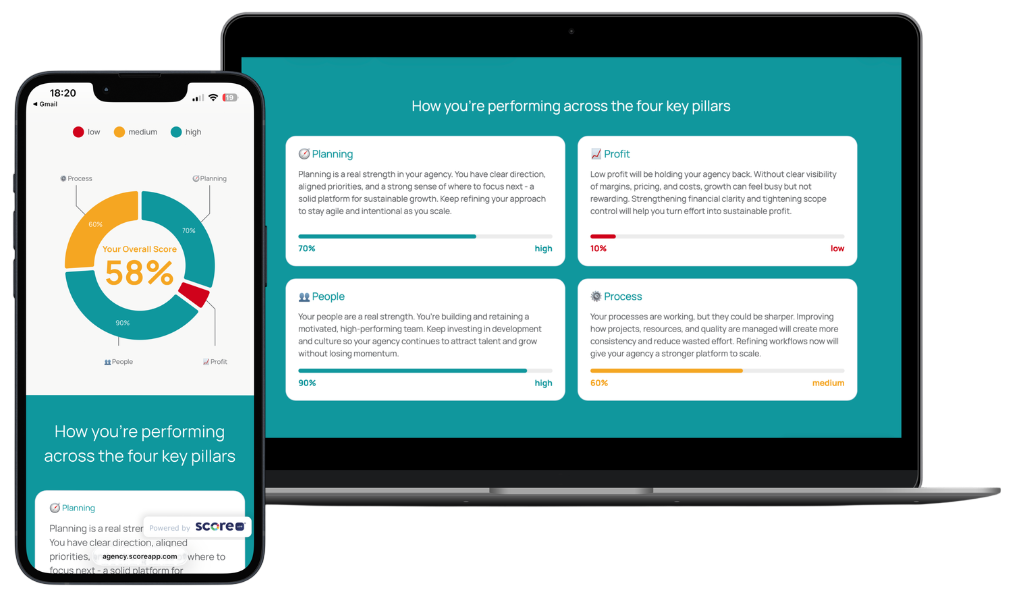
Broadly, the issues split into four areas: management structure, people, process, and systems.
Management structure
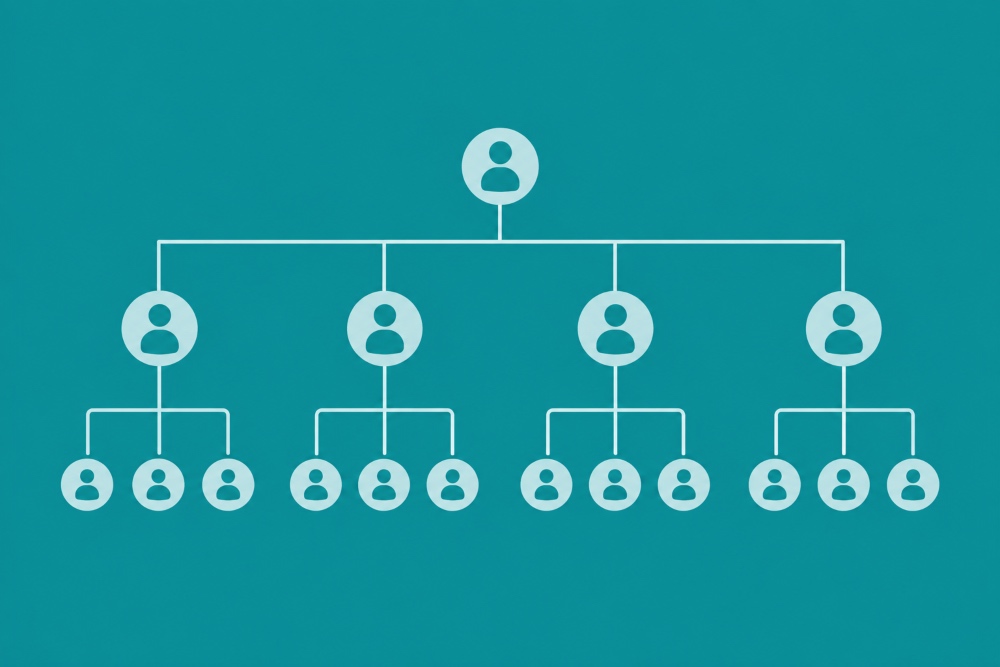
- No org chart with clear reporting lines, so people don't always know who they report to, especially as new senior hires come in.
- No layer between founders and delivery teams, so every decision still routes through the same one or two people.
- Growth plans that cover revenue targets but not the org structure needed to actually deliver against them.
People
- Blurred roles. At 20 people, everyone naturally picks up whatever needs doing, and it works because people are close enough to sort it out between themselves. At 50, those same grey areas cause real friction - two people assuming the other owns something, work getting missed, or senior people still doing tasks that should have been delegated months ago.
- No senior finance person working across both lagging and leading indicators. Founders sense profitability rather than measure it, and without someone tracking leading indicators too, problems only surface after the numbers have already gone wrong.
- No ops manager. Someone needs to own resourcing, workflow, and the coordination between departments - full time, not as a side task.
- No HR support, even fractional, covering the essentials - job descriptions, contracts, appraisals. These get overlooked while everyone's focused on delivery, until a gap becomes a real liability.
Process
- Resourcing by gut feel. Instinct-based staffing works at 20 people and breaks down past 30, either overloading your best people or hiding capacity you actually have.
- Inconsistent onboarding. Culture and workflow knowledge that used to transfer by osmosis doesn't scale when you're hiring faster than that can happen.
- Scope and budget tracking left informal, so creep goes unnoticed until a project is already unprofitable.
Systems
- No single source of truth. Project status, client history, and financials scattered across tools and inboxes instead of one place, so context disappears when someone is out or leaves.
- Multiple tools doing the same job. Different teams using their own project management, reporting, or file storage tools, so data lives in silos and nothing talks to anything else.
- No consistent data collection, so there's nothing to analyse when you want to improve profitability, utilisation, or account performance - you're guessing instead of measuring.
- Tools that worked for a 20-person team not being revisited as the team doubles.
Quick self-check: are you already past the tipping point?
If you're not sure whether this applies to you yet, run through these. Three or more "yes" answers usually means the cracks are already showing, even if no client has walked yet.
- Do two people sometimes both think they own the same piece of work — or does something occasionally fall through because neither did?
- Has a senior person told you (or each other) they're still doing hands-on delivery work that should have been delegated by now?
- If your ops lead went on leave tomorrow, would anyone else know where to find client history, project status, and financials in one place?
- Has scope crept on a project without anyone flagging it until it was already unprofitable?
- Do new hires learn "how we do things here" mostly by osmosis rather than from a defined onboarding process?
- Could you name your resourcing plan for the next quarter, or is it closer to a gut feeling?
None of these individually is a five-alarm fire. But together, they're usually the earliest signal - well before the P&L shows it - that structure hasn't kept pace with headcount.
Plan before you need it
None of this has to be a crisis. The agencies that handle growth well aren't the ones that avoid these issues - they're the ones that get ahead of them, with a plan in place before the cracks show up, not after a client walks because the wheels came off mid-project.
If you're heading toward 50 people, or already there, it's worth asking whether your structure, people, process and systems are ready for where you're going - not just where you've been.