I keep hearing the same thing from agency founders. We need more AI. We need to implement AI. We need to be an AI first agency.
When I ask what that looks like in practice, the answer is usually a pause.
It's a bit like saying we need more tech in the agency. It's so broad it doesn't tell you what to do on Monday morning.
And the pressure to say it is real. Clients are asking about AI. Competitors are talking about it. Every week there's a new tool and a new post telling you that you're already behind.
I understand why that makes people want to move fast. But moving fast without a plan is how agencies end up with lots of subscriptions, a few half-finished experiments and a team that's no better off than before.
The agencies that get real value will be the ones that take a structured approach and make changes they can actually see. Less time on admin, faster turnaround, fewer overruns and better margin. If you can't point to something tangible, it isn't working yet.
The basics have been around a lot longer than AI
Clear processes, good briefs, accurate timesheets, sensible estimating and regular financial reporting mattered long before anyone was talking about AI. They still decide whether an agency makes money.
AI doesn't replace any of that. It builds on it. If you can't describe how a job moves through your agency, there's nothing to automate or improve. If two people do the same task in two different ways, you'll just get inconsistent results faster.
So don't skip the basics because the new thing looks more exciting. Know your process, agree your best practice and write it down so everyone is working from the same version.
Automation and AI are two different things
A lot of people use the two words as if they mean the same thing. I treat them separately, and I think agencies should too.
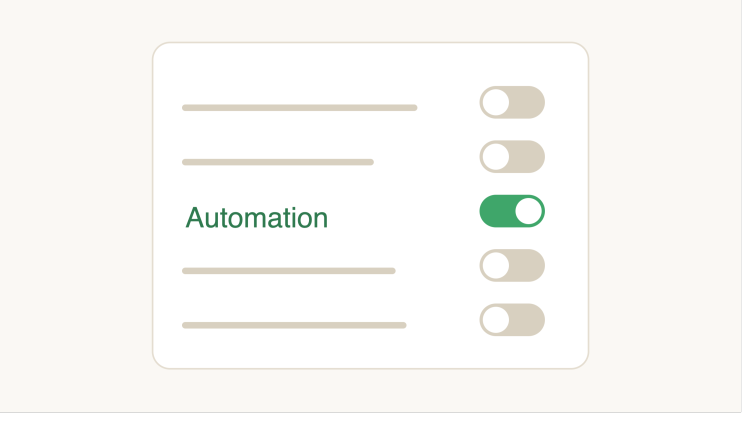
Automation is the low-hanging fruit. It's about taking a task someone does by hand and setting rules so it happens on its own. A good example is a quote. Once it's produced, who needs to approve it before it goes to the client? With automation, it goes to the right person, gets approved, and only then gets sent. Nobody has to remember to chase it.
AI is where you add a bit of extra intelligence on top. It's a different job, and it usually comes after the foundations of the process and automation are in place.
Both are worth looking at, but keep them separate. If you lump them together, you end up with a vague idea and no plan.
Start with the problem
Before you choose anything, work out what's worth fixing. The quickest way is to ask the people doing the work.
- What do you repeat every week that you wish you didn't have to?
- Where does work get stuck waiting for someone else?
- Which jobs keep overrunning, and why?
You'll usually find the same themes. Chasing approvals, chasing timesheets, re-keying information and hunting for things. Pick the one that costs the most time or money and has a clear process behind it. Start there.
Look at what you already have
Before you buy or build anything, check what's already in the tools you pay for. A lot of newer software is adding automation and AI features, so ask your suppliers what's available.
It's often easier to roll out something that sits inside the tools your team already uses every day. It also gives people a chance to see automation and AI working on their own work, in a way they can see for themselves. That does more for adoption than a presentation about where the industry is heading.
Make it something the whole agency uses
I see this a lot. A couple of people get excited, build their own little agents and shortcuts, and use them on their own work.
That's fine for them. It doesn't move the agency forward.
What makes the real difference is having something that everyone uses. The same approach, the same tools and the same way of working. When everyone is working one way, you can see what's happening, measure it and improve it. When everyone has their own setup, you can't.
Try it small
Don't try to change everything at once. Pick one thing, try it with one team and see what happens.
Before you start, note where you are today. Afterwards, check again. Has it saved time? Has it protected margin? Is the team actually using it? If yes, roll it out. If not, find out why before moving on. It might be the process, the tool or the way it was introduced.
AI isn't one and done
Implementing AI isn't a project with an end date. The tools change quickly, and what's possible changes with them.
That means you need a rhythm of looking at what's working, what isn't and what's new. And it can't be one person's job. Someone needs to own it, but ideally everyone in the agency is involved. The people doing the work are the ones who spot the next thing worth improving.
Don't chase the shiny object
There's a new AI tool or feature almost every week, and it's very easy to get excited by the latest one. Someone sees a demo, someone sends a link, and suddenly half the agency is trying something different.
This is where a simple process or policy helps. Before anyone spends time or money on something new, ask a few basic questions.
- What problem does it solve?
- Do we already have something that does this?
- Who would own it and who would use it?
- How will we know if it worked?
If a new tool is better, it'll still be better in a month. It can wait for a proper look.
So what are you actually going to do?
If you've said "we need to be more AI" in a meeting recently, here's what I'd ask next.
- Which process are we improving?
- Is it clear and agreed by the people who use it?
- What can be automated first?
- Where could a bit of intelligence help after that?
- Do the tools we already use do this?
- Who owns it, and how will everyone get involved?
- How will we know it worked?
That's a plan. "Be more AI" is not.
Keep it practical
None of this needs to be over the top. The agencies getting real value from AI usually picked something specific, got the basics right, rolled it out to everyone and kept checking it was making a difference.
Start with the basics, automate what's repetitive, add intelligence where it helps, make sure everyone is using it and keep it moving. That's what AI actually looks like inside a creative agency.