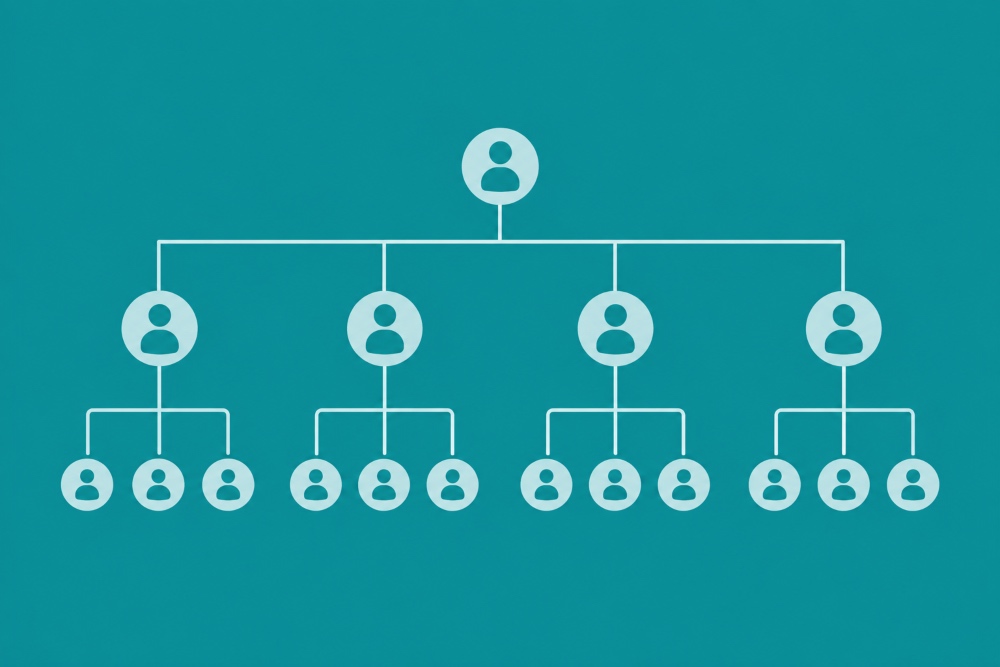
It’s a question that doesn’t get asked very often, because in most agencies growth and headcount tend to move together. More clients lead to more projects, more projects create pressure on delivery, and the natural response is to add more people. It feels logical and, in many cases, it is necessary.
But when I look across the agencies I work with, it’s often clear that teams are bigger than they actually need to be to deliver the work successfully. That’s not a reflection of effort or talent. It’s usually because the way the agency operates hasn’t evolved at the same pace as the business, or the technology now available to support it.
How growth usually gets solved
For years, agencies have scaled by adding people. New business lands, the team stretches, pressure builds, and eventually another hire gets approved. Over time, this creates an operating model where headcount becomes the default solution to delivery pressure.
The more useful question is not always whether more people are needed, but whether the work could flow more effectively through the business. When planning, scoping, and delivery disciplines are strong, the need to add people often looks very different.
Busy doesn’t always mean productive
One of the clearest signals I see is teams that are extremely busy but not always productive in a commercial sense. Calendars are full, people feel stretched, and there’s constant activity.
A lot of time gets absorbed by internal meetings that don’t move work forward, reactive conversations, status updates, and coordination that exists because the underlying plan isn’t clear enough. Add in context switching across multiple priorities and the amount of real focused delivery time becomes surprisingly limited.
Productive teams look different. There’s still pressure, but it’s more focused. Work is planned properly, priorities are clear, and time is spent on the activities that actually move projects forward and create value for clients. When that balance shifts, agencies often discover they don’t need as much capacity as they thought.
How teams end up getting bigger
Most agencies don’t deliberately overhire. It happens gradually as small inefficiencies accumulate. Work takes longer than planned because scopes aren’t tight enough.
Teams spend more time coordinating than they should. Roles overlap because responsibilities aren’t clearly defined. Processes rely on individuals stepping in rather than systems supporting delivery.
Each of these things makes sense in isolation, but together they create an environment where adding people feels like the only way to relieve pressure, even when the underlying issue is how the work is structured.
The role AI and automation now play
This is where the conversation has shifted significantly. AI and automation are removing a growing number of low-value, repetitive tasks that agencies historically needed people to handle. Reporting, status updates, documentation, first drafts, note taking, and data analysis can now be supported or accelerated in ways that weren’t possible even a few years ago.
This doesn’t reduce the importance of people, but it does change where their time should be spent. The real opportunity is freeing teams from operational overhead so they can focus more on thinking, problem solving, creativity and client value.
Agencies that embrace this shift often find they don’t need to scale headcount at the same rate in order to grow revenue.
The advantage of flexible capacity
One of the strengths of our industry is the ability to flex capacity when needed. Freelancers allow agencies to scale delivery without permanently increasing headcount, which creates a much more adaptable operating model. When used well, this flexibility means agencies can keep core teams focused on high-value work while bringing in additional expertise or capacity when demand requires it.
It’s one of the reasons agencies don’t always need to grow the permanent team at the same pace as revenue - the model already supports a more responsive way of scaling.
The cost of complexity
A larger team isn’t just a payroll number. It changes how the agency feels to run. Communication becomes heavier, decision-making slows down, and more time is spent coordinating rather than delivering. Margins can come under pressure even when revenue is growing, which is why growth can sometimes feel harder than it should.
From the outside, the agency looks busy and successful. Internally, the experience is often more complex.
What successful scaling actually looks like
The agencies that scale well don’t just add people. They improve how work flows through the business. They invest in better planning, strengthen scoping discipline, define roles clearly, and build processes supported by systems and automation rather than relying on individuals stepping in to make things work.
Headcount still grows, but it grows intentionally rather than reactively, and the agency feels more stable as a result.
A different way to think about team size
There isn’t a perfect number, and this isn’t about running lean at all costs. It’s about making sure every role exists for a clear reason and contributes to how the agency delivers and performs commercially.
When the operating model is supported by stronger planning, clearer processes, smarter use of technology, and flexible capacity, teams feel more focused, delivery feels smoother, and growth becomes more sustainable.