In most creative agencies, laptops are the core infrastructure of the business.
Designers, strategists, producers and developers all rely on their MacBooks every day. Client files, creative assets, presentations and access to internal systems all sit on these devices. Despite how central they are to agency operations, the way MacBooks are managed is often surprisingly informal.
When an agency is small, this rarely feels like a problem. Someone orders a laptop, it gets set up manually, and when an employee leaves the company the device is wiped and passed on to the next hire.
However, as agencies grow, this approach can quickly start to introduce operational risks.
Why MacBook security becomes more important as agencies scale
As agencies expand, the number of devices, users and systems increases quickly.
Hiring accelerates. Freelancers move between projects. Remote working becomes common. At the same time, clients increasingly expect agencies to demonstrate stronger security and compliance practices.
All of this places more pressure on how company devices are managed.
The result is a number of familiar situations inside growing agencies.
A new starter arrives on their first day but their laptop has not been fully configured. Applications still need to be installed and access to internal systems granted before they can begin work.
In other cases, devices end up linked to personal Apple IDs, which makes them difficult to reset or reuse when employees leave. Recovering laptops from leavers can also become complicated, particularly when freelancers or remote staff are involved.
There are also more serious scenarios. A MacBook may be lost or stolen while someone is travelling or working remotely. Without proper controls in place, removing company data quickly from that device can be difficult.
Given how much client information and intellectual property sits on agency laptops, this becomes a genuine business risk.
When informal laptop management stops working
Many agencies reach a stage where informal device management simply stops working.
At around ten people, manual setup is manageable. Someone in operations or IT can deal with problems as they arise.
But as the agency grows towards thirty or forty people, the cracks begin to appear. Devices become harder to track, onboarding becomes inconsistent and security risks increase. Larger clients may also begin asking more detailed questions about how company devices and data are managed.
What once felt like a small operational detail becomes something leadership teams need to address properly.
What is Mobile Device Management (MDM)?
Mobile Device Management (MDM) is software that allows businesses to manage and secure company devices such as laptops, phones and tablets.
For agencies using MacBooks, an MDM system allows devices to be configured automatically, applications to be deployed remotely and security settings to be enforced across all devices. If a laptop is lost or stolen, the organisation can lock or wipe the device remotely.
Instead of manually configuring every laptop, the organisation can manage devices centrally.
This becomes increasingly valuable as agencies grow.
Apple Business Manager - the foundation for managing MacBooks
Apple provides a useful starting point through Apple Business Manager, a free platform that allows organisations to register MacBooks and other Apple devices directly to the business.
This ensures devices remain owned and controlled by the company rather than tied to individual employees.
Once devices are registered, Mobile Device Management tools can automate how those devices are deployed and managed.
For example, when a new employee switches on their MacBook for the first time, the laptop can automatically install the correct applications, configure security settings and grant access to company systems. Applications can update automatically, and access can be removed instantly when someone leaves the business. If a device is lost or stolen, it can be locked or wiped remotely.
Instead of every new hire requiring manual setup, much of the process becomes automated.
Strengthening the operational foundations of the agency
Agencies often invest heavily in project management platforms, CRM systems and finance tools because those systems are closely linked to revenue.
The infrastructure that supports the team itself often receives far less attention.
Ensuring company laptops are properly managed and secured may seem like a small operational detail, but it plays an important role in protecting client data, supporting smooth onboarding and maintaining control as the agency grows.
The topic came up during an Agency Folk event where Ryan Kelly from HardSoft shared how organisations are improving the way they manage Apple devices. HardSoft specialise in helping businesses deploy and manage Apple devices at scale, simplifying device deployment, management and security through solutions such as Shepherd MDM.
For agencies that have not yet looked closely at how their laptops are managed, it may be worth reviewing the processes currently in place. As agencies grow, the operational foundations that support the business become increasingly important.
🌱 Ready to grow but feeling stuck?
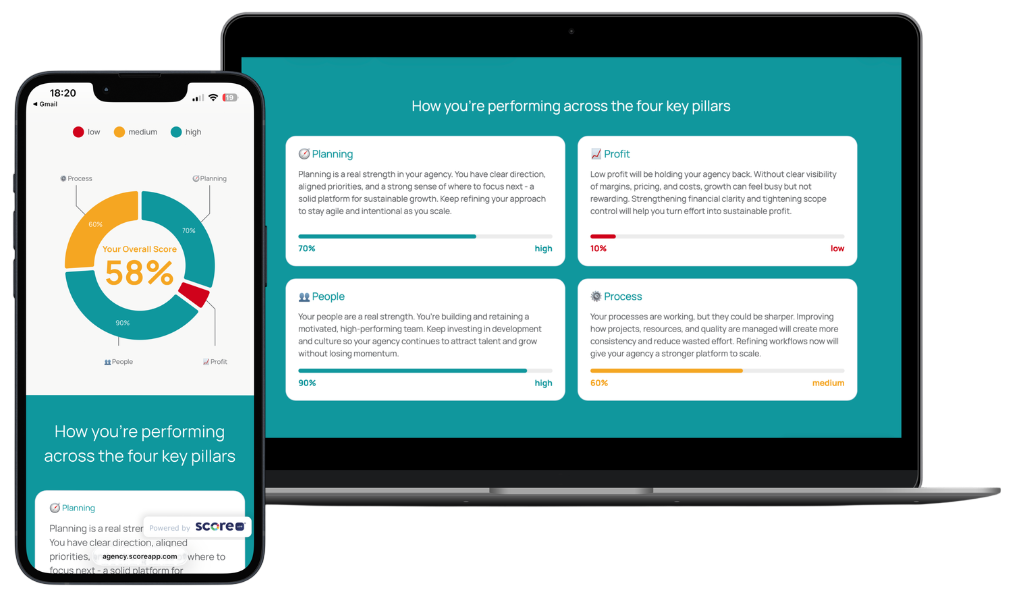
Take the free 3-minute assessment to get a clear view of where you stand - and what to fix first. You’ll get tailored, actionable advice across the AgencyOS™ framework - Planning, Profit, People and Process.
No fluff. No strings attached. Just insight you can use straight away