Every agency has them. The go-to people. The ones founders call at 9pm. The ones who somehow always deliver, no matter what gets thrown at them.
And every agency has the others - the ones who are rarely pulled into the chaos, who sail through weeks and months without scrutiny, who live comfortably in the shadows.
If you're not paying attention to both, you're building an agency that slowly self-destructs.
The busiest people are often the most vulnerable
It sounds counterintuitive. Your star players are engaged, valued, trusted. Why would they leave?
Because being trusted with everything, constantly, without acknowledgement or relief, isn't a privilege - it's a slow burn. The founder relies on them precisely because they never let anything drop. So nothing gets redistributed. No one steps in. They just absorb more.
Meanwhile, the poor performers? Lower workload. Less pressure. Less likely to quit.
You end up in a perverse situation: the people most critical to your business are the ones most at risk of leaving, while the ones adding least value have the most comfortable ride.
By the time they hand in their notice, you've already lost them
I've seen this play out more times than I can count. A founder is blindsided by a resignation from someone they thought was fine - happy, even. But mentally, that person checked out months ago.
At that point, the offer of more money rarely works. If someone has reached the point of handing in their notice, it usually means they've been pushed to their edge - and money doesn't fix that. They've already imagined a life on the other side, and no counter-offer brings them back from that.
The founder isn't always the first to know
With so many plates spinning, founders can't always see clearly who isn't pulling their weight. The day-to-day demands of running an agency make it easy to miss.
But it rarely escapes their colleagues.
The team around an underperformer usually knows long before anyone in leadership does. They cover for them, work around them, and absorb the extra load. When nothing is done about it, that silence becomes frustrating. Frustration turns to resentment. And resentment, left unchecked, kills morale faster than almost anything else.
The tell-tale sign I watch for
One of the fastest ways I can identify a problem - particularly at senior level - is simple: whose name never comes up?
When I'm working with an agency, I pay close attention to who gets mentioned in conversation. Strong performers get talked about naturally. People reference them, credit them, pull them into discussions. But when someone senior is consistently absent from those conversations, that's a signal worth investigating.
People don't like to bad-mouth colleagues to an external person, even when they know there's a problem. So they say nothing. It's only once I start asking the right questions and digging into the reality that the truth surfaces - and it usually comes quickly.
What's striking is that when I take those findings to the founder, they're almost never surprised. They had a sense something was off. They just hadn't dealt with it - whether through reluctance to cause disruption, loyalty to a long-standing team member, or simply not having the time to confront it. It's only when I make it an objective part of moving the agency forward that it finally gets addressed.
Line managers are your first line of defence
One of the most overlooked factors in all of this is whether your line managers actually have the training to spot and act on performance - in both directions.
Identifying a poor performer is one thing. Knowing how to handle that conversation constructively, document concerns properly, and manage the process fairly is another. The same applies to recognising and rewarding strong performance before it walks out the door.
Too many agencies promote great practitioners into management roles without giving them the tools to manage people effectively. They're expected to figure it out. Most don't - and the cost of that lands on everyone else.
Investing in your line managers isn't a nice-to-have. It's how you protect the people you can't afford to lose.
How to spot a poor performer before it becomes a problem
- Look at workload distribution, not just output. Who is consistently under capacity? Who is always at breaking point?
- Watch who avoids accountability. Poor performers often deflect, go quiet in reviews, or are conspicuously absent when things go wrong.
- Notice whose name stops coming up. Especially at senior level - absence from conversation is often absence from contribution.
- Check in on the quiet ones. Not everyone who's struggling raises their hand. Their poor performance may be related to something else.
How to retain the people you can't afford to lose
- Don't wait for a reason. Checking in on your best people when nothing is wrong - that's when it counts most.
- Redistribute the load. If the same person is always firefighting, that's a structural problem, not a personal one.
- Have honest conversations regularly, not just at annual reviews. Ask directly: what's frustrating you? What would make this better?
- Reward disproportionate contribution disproportionately. If someone gives more, they should get more - in pay, flexibility, autonomy, or progression.
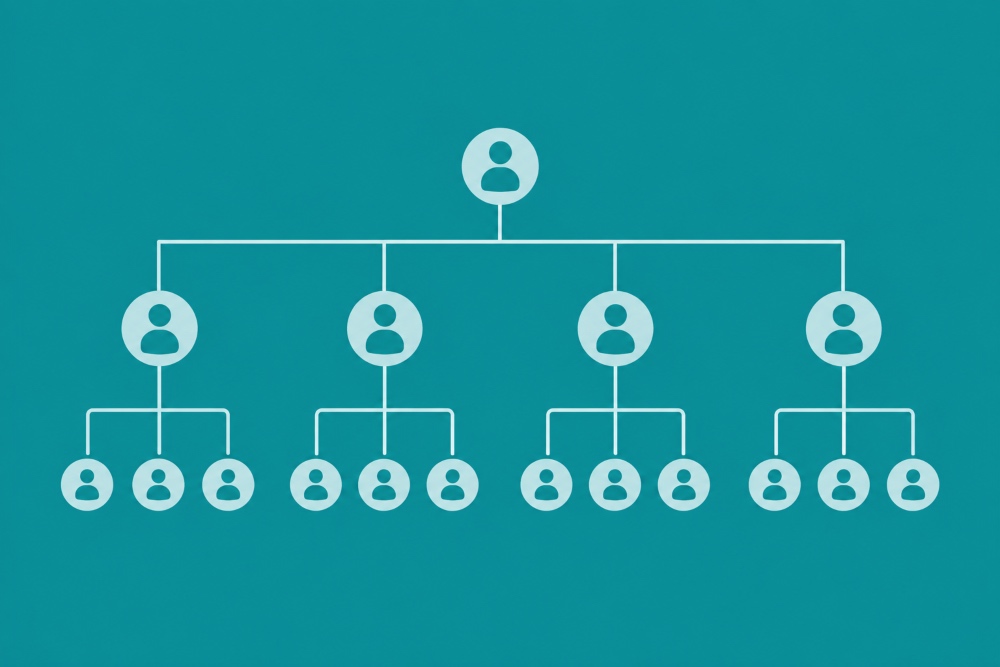
As you scale and add headcount, it gets easier to lose visibility of individuals. Layers of management appear, communication channels multiply, and before long you're relying on second-hand information to understand how your team is really feeling.
The agencies that grow successfully are the ones who build in ways to stay close to their people - removing the weakest link and looking after their superstars.